It seemed harmless enough. A sheriff's deputy from Birmingham, Ala., was pulling a nail with needle-nose pliers when the nail slipped. In a second, the pliers plunged into his eye, gashing his cornea, tearing most of his iris, and smashing his lens.
The deputy's case is typical. He was not wearing protective eyewear. In fact, in a Bureau of Labor Statistics (BLS) survey, nearly three out of five workers who suffered eye injuries were not wearing eye protection. However, 40 percent of injured workers surveyed by Bureau of Labor Statistics were wearing protective eyewear, but may have not been wearing the right kind. So which type is right?
Safety glasses: Use safety glasses with side protection for working conditions that produce chips or flying particles.
Goggles: Use them in situations where there is a danger of higher impacts or chemical spills.
Hybrid safety glasses: Although not as safe as goggles, hybrid safety glasses with foam or rubber around the lenses provide more protection than regular safety glasses.
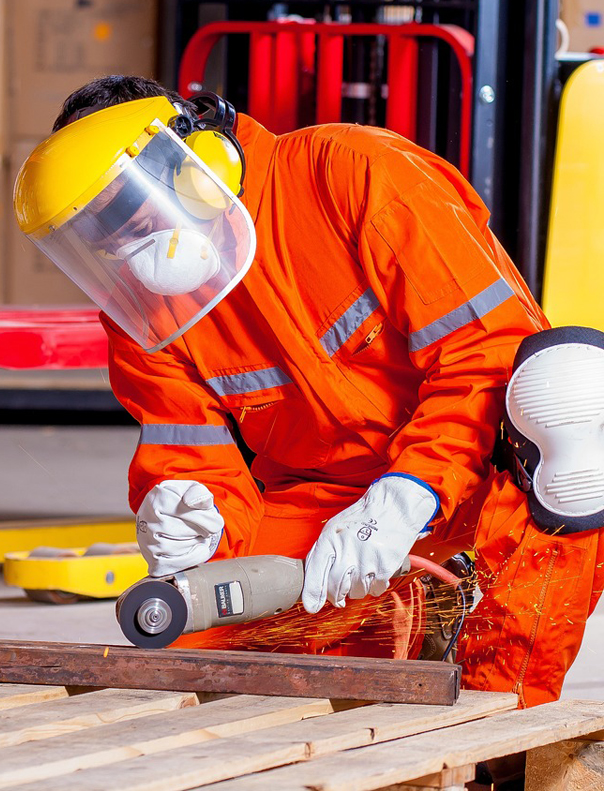
Face shields: Face shields guard against injuries to the face, such as spraying, chipping, and hazardous chemicals or blood-borne hazards. Eye protection still must be used.
Specialty Protection: This includes filtered helmets or goggles for tasks like welding or working with lasers.
Even with the right equipment, you can still injure your eyes if the equipment does not fit properly. Safety glasses should rest firmly on top of the nose and close to, but not against, the face. The nosepiece should not slide down the face due to moisture. Proper fit, along with proper education, is the best prevention for workplace eye injuries.

Rick Good spent ten years in the newspaper business, including with The News & Observer (Raleigh, NC) and The Greenville News (Greenville, SC). He co-wrote, with Melinda Coleman, Rutledge to Riley: Governors of South Carolina, 1776–Present (Published by The Greenville News), and is the author of Mind Games Trivia #1 (Amazon). He has recently spent 15 years creating original trivia content through Sounds Good Mobile Entertainment and continues that with his new company, SGME Software. He edits The Smart Reader’s money, real estate, and business coverage.