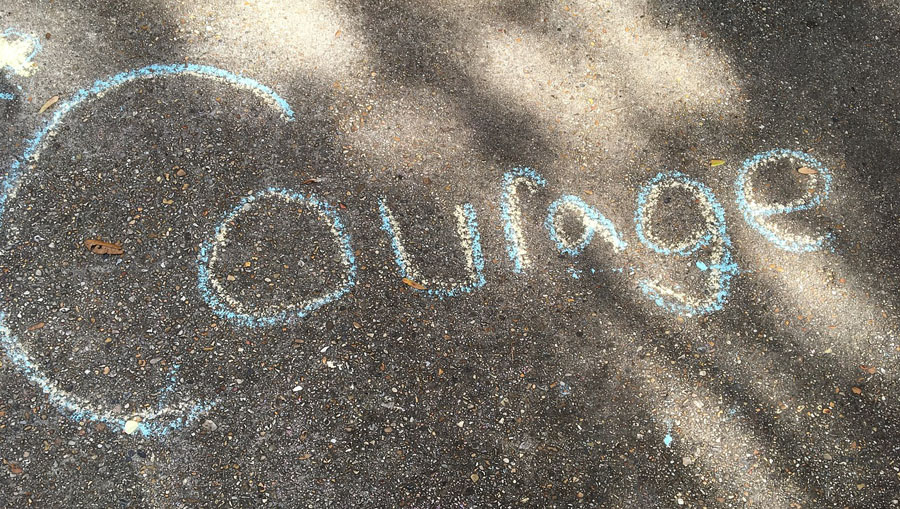
When you think about people with courage, soldiers and firemen probably come to mind. But courage is about more than how people react to traumatic events.
Speaking up at a meeting takes courage. So does sharing your true feelings with a loved one or confronting financial fears.
Courage involves thinking. Instead of succumbing to paralysis, courage enables you to think clearly and take constructive action in spite of your fear of the risks involved.
Hope can be an obstacle to courage. While it provides many positive thing, it also allows us to relax and gives us permission not to act. It can be accompanied by denial, which is the lack of courage to face the truth.
Aggression and procrastination are another anti-courage factor. Instead of acting realistically, the aggressive person may push blindly through a situation. The procrastinator might do nothing at all.
In his book Business Games: How to Recognize the Players and Deal with Them (Boardroom Classics), psychiatrist Martin Groder, M.D., says teaching yourself to think realistically is one pathway to courage. That includes not exaggerating the possible consequences of what you will do.
It's OK to admit to yourself that you are afraid to confront problems when they arise. When that happens, consider your choices realistically.
First, view the situation as an outsider would. Be willing to decide whether you have enough information to move forward. If not, consult experts or do some research.
Consider your principles. Moral courage comes from doing what you believe is right instead of going along with others' ideas of right and wrong.
Be ready to face disapproval, and know that you can handle it.

Rick Good spent ten years in the newspaper business, including with The News & Observer (Raleigh, NC) and The Greenville News (Greenville, SC). He co-wrote, with Melinda Coleman, Rutledge to Riley: Governors of South Carolina, 1776–Present (Published by The Greenville News), and is the author of Mind Games Trivia #1 (Amazon). He has recently spent 15 years creating original trivia content through Sounds Good Mobile Entertainment and continues that with his new company, SGME Software. He edits The Smart Reader’s money, real estate, and business coverage.