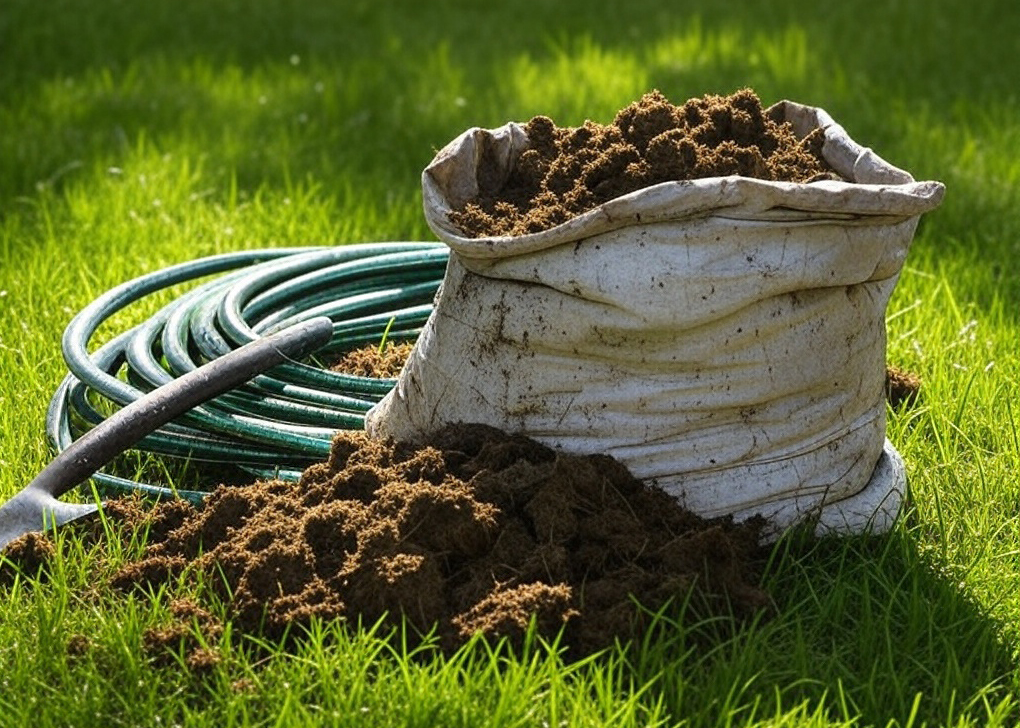
Compaction, poor drainage, heavy clay content, and other natural or manmade variations can all lead to less-than-ideal conditions for growing beautiful flowers and perfect tomatoes. But a little elbow grease (and a few bags of aged manure) can yield short and long-term benefits that your plants — from this year and years to come — will appreciate.
When air pockets in the soil collapse, the result is compaction — rock hard soil that starves plant roots of water and oxygen. Compaction has a variety of causes, including foot traffic, heavy machinery, overworking soil or working soil that is too wet or too dry, and high clay content. Minerals like gypsum work well to aerate clay soils, and the addition of organic material like compost helps create new air pockets in the soil. And while you might not be able to get through the soil, earthworms can, digging burrows and leaving nutrient-rich droppings wherever they go.
Most plants can't thrive without adequate soil drainage, which keeps the soil oxygenated and also works to prevent compaction. Organic matter such as compost, peat moss, or processed rice husks can help, along with other amendments like sand and perlite. You can also build up a slope to encourage water to flow away from the flower bed.
Clay soil is an uphill battle for many gardeners, and the solution — as with so many other garden problems — is more organic matter, such as compost, well-rotted (not fresh) manure, and leaf mold. Gypsum can also help break up clay soil, but use with caution — it can alter soil pH and deplete nutrients.

Rick Good spent ten years in the newspaper business, including with The News & Observer (Raleigh, NC) and The Greenville News (Greenville, SC). He co-wrote, with Melinda Coleman, Rutledge to Riley: Governors of South Carolina, 1776–Present (Published by The Greenville News), and is the author of Mind Games Trivia #1 (Amazon). He has recently spent 15 years creating original trivia content through Sounds Good Mobile Entertainment and continues that with his new company, SGME Software. He edits The Smart Reader’s money, real estate, and business coverage.