
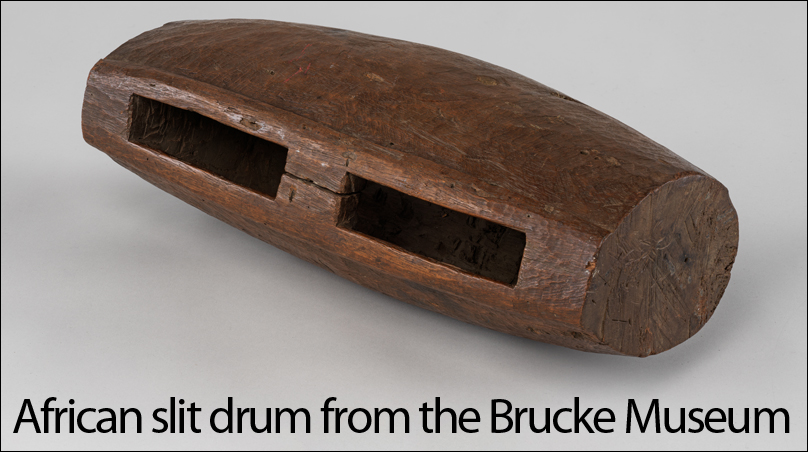
The tongue drum is a modern invention, and yet it isn't.
According to J. Kevin Wolfe (blog: wolfewithane.com), the ancestors of these drums were the wooden slit drums found in African, Aztec and Indonesian cultures. This type of drum developed independently within these cultures.
The archaic versions had just one or two tones formed by slits cut into a log or a crafted piece of wood. Wooden tongue drums did evolve but they were still simple. The real evolution of the drum didn't occur until 1990.
In that year, a fan of the wooden tongue drum, Jim Doble, thought he might make a tongue drum out of an old water tank. He cut tongues into the end of the tank and the Whale Drum was born. But it was essentially a tongue drum, but made of metal.
Around 2007 a fellow named Dennis Havelina decided to take part of a propane tank from his grill and cut eight slits to make eight distinct tones. He called it the Hank Drum. It so happens that his 12-inch, eight-note tongue drum became the standard for future drums.
The idea was refined by others until 2016, when factories in China began mass producing the drums from steel or alloys and managed to bring the price down below $100.
Today there are companies that specialize in the tongue drum. Among those companies is drumemusic.com, specializing in ancient instruments and sounds. You can hear the mystical music of their tongue drums on You Tube.

Allyson Good curates senior living, health, and family content. She is formerly the Managing Editor of Active Life, a print newspaper published in 2016-2017 for seniors, choosing practical articles on health, money, safety, and everyday living for older readers. She is also an avid gardener and offers up Garden Hints and Tips on a regular basis.