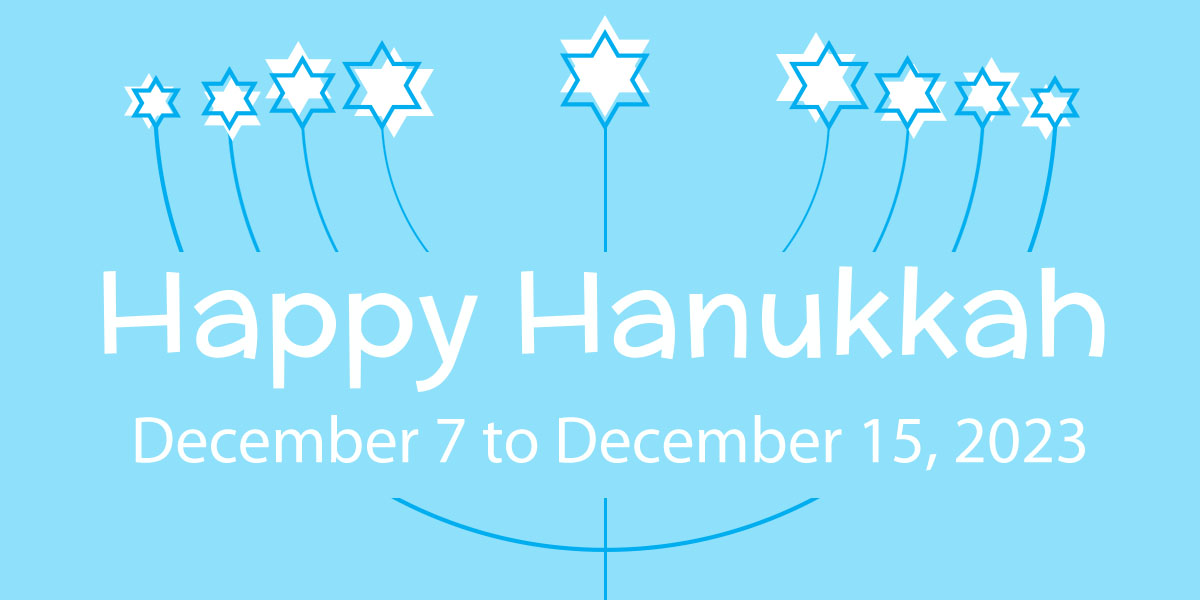
The story of Hanukkah begins in Greek Seleucid Empire-occupied Israel in the year 164 B.C. King Antiochus and his soldiers entered the Temple of Solomon and despoiled all the holy vessels, including sacred olive oils used to light the menorah, the seven-branched gold candelabrum which was kept permanently lighted. Greek authorities issued new edicts forbidding Jewish practices such as Sabbath observance. Even to profess that one was a Jew was punishable by death.
The high Priest Mattisyahu formed a band of guerrillas and fled to the hills, executing night raids on their tormentors. The revolution had begun.
Judah Maccabee, one of the greatest freedom fighters in Jewish history, gathered an army. With God's help, he managed to defeat the enemy and recapture Jerusalem.
On re-entering the devastated Holy Temple, the victorious Jews searched for any sacred oil that might have remained sealed and usable. They found just one small flagon of oil — enough to burn for one day, but eight days were needed to prepare more oil suitable for this purpose.
The miracle of Hanukkah was that this tiny amount of oil burned in the gold Menorah, for eight full days, enabling the new kosher oil to be prepared in the meantime.
Today it is common for people to place their Hanukkah lights in the window for all to see. It is a joyous time when children receive gifts of money or small presents.
They play a game by spinning a top (dreidel) that has a different Hebrew letter on each side. The tradition began when Greeks forbade the study of the Torah. The people studied in small groups and quickly took out the dreidel if Greek soldiers came near.

Rick Good spent ten years in the newspaper business, including with The News & Observer (Raleigh, NC) and The Greenville News (Greenville, SC). He co-wrote, with Melinda Coleman, Rutledge to Riley: Governors of South Carolina, 1776–Present (Published by The Greenville News), and is the author of Mind Games Trivia #1 (Amazon). He has recently spent 15 years creating original trivia content through Sounds Good Mobile Entertainment and continues that with his new company, SGME Software. He edits The Smart Reader’s money, real estate, and business coverage.