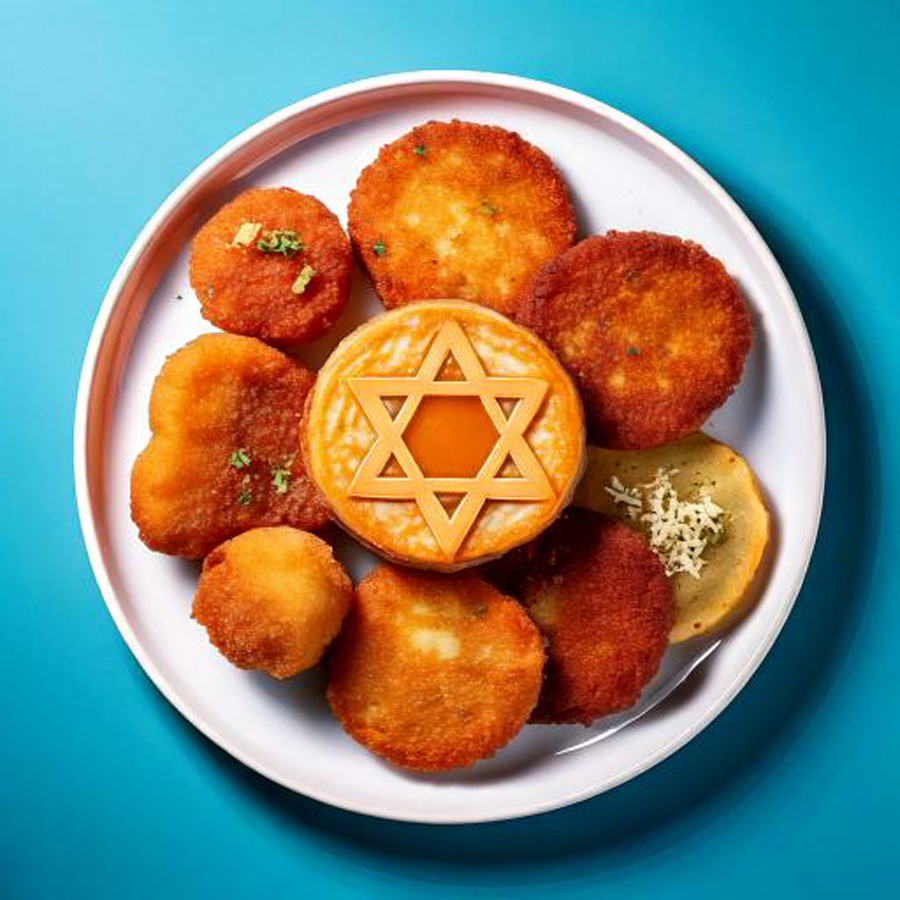
Jewish people around the world will mark the first night of Hanukkah on Dec. 25 this year, lighting additional candles each night to commemorate the heroic defense and rededication of the Second Temple of Jerusalem in 164 B.C.E. Fried food is traditionally consumed to serve as a reminder of the oil that illuminated each night long after it should have burned away. Today, the flavors of Hanukkah are as varied and unique as the communities that make up the Jewish diaspora, and though the Jews of ancient Jerusalem may not recognize many modern ingredients, the tradition still remains.
* Latkes: A classic Hanukkah dish among Ashkenazi Jews of Eastern European descent, who often eat it with sour cream and applesauce.
* Bunuelos: An airy fried dough dessert that's commonly eaten in Mexico, Cuba, and Colombia.
* Kibbet yatkeen: Syrian Jews make these fried patties with pumpkin and bulgur.
* Malawach: A classic among Yemenite Jews, who top this fried flatbread with eggs and a spicy sauce.
* Keftes de prasa: Leek fritters that originated with Sephardic Jews in Turkey, Greece, and Romania.
* Sufganiya: This yeasty fried donut originated in Poland and is now the ultimate Hanukkah food in Israel, where trays of sufganiyot begin flying off the shelves during the autumn.
* Sfenj: Jews of Moroccan descent have their own twist on the Hanukkah donut, the sfenj, which boasts a spongy texture that goes perfectly with honey.
* Risalamande: It's not fried, but the risalamande has been a beloved Hanukkah treat for generations among Denmark's Jewish community. Historians believe that Danish Jews invented risalamande centuries ago as their own take on traditional Danish Christmas puddings.

Rick Good spent ten years in the newspaper business, including with The News & Observer (Raleigh, NC) and The Greenville News (Greenville, SC). He co-wrote, with Melinda Coleman, Rutledge to Riley: Governors of South Carolina, 1776–Present (Published by The Greenville News), and is the author of Mind Games Trivia #1 (Amazon). He has recently spent 15 years creating original trivia content through Sounds Good Mobile Entertainment and continues that with his new company, SGME Software. He edits The Smart Reader’s money, real estate, and business coverage.