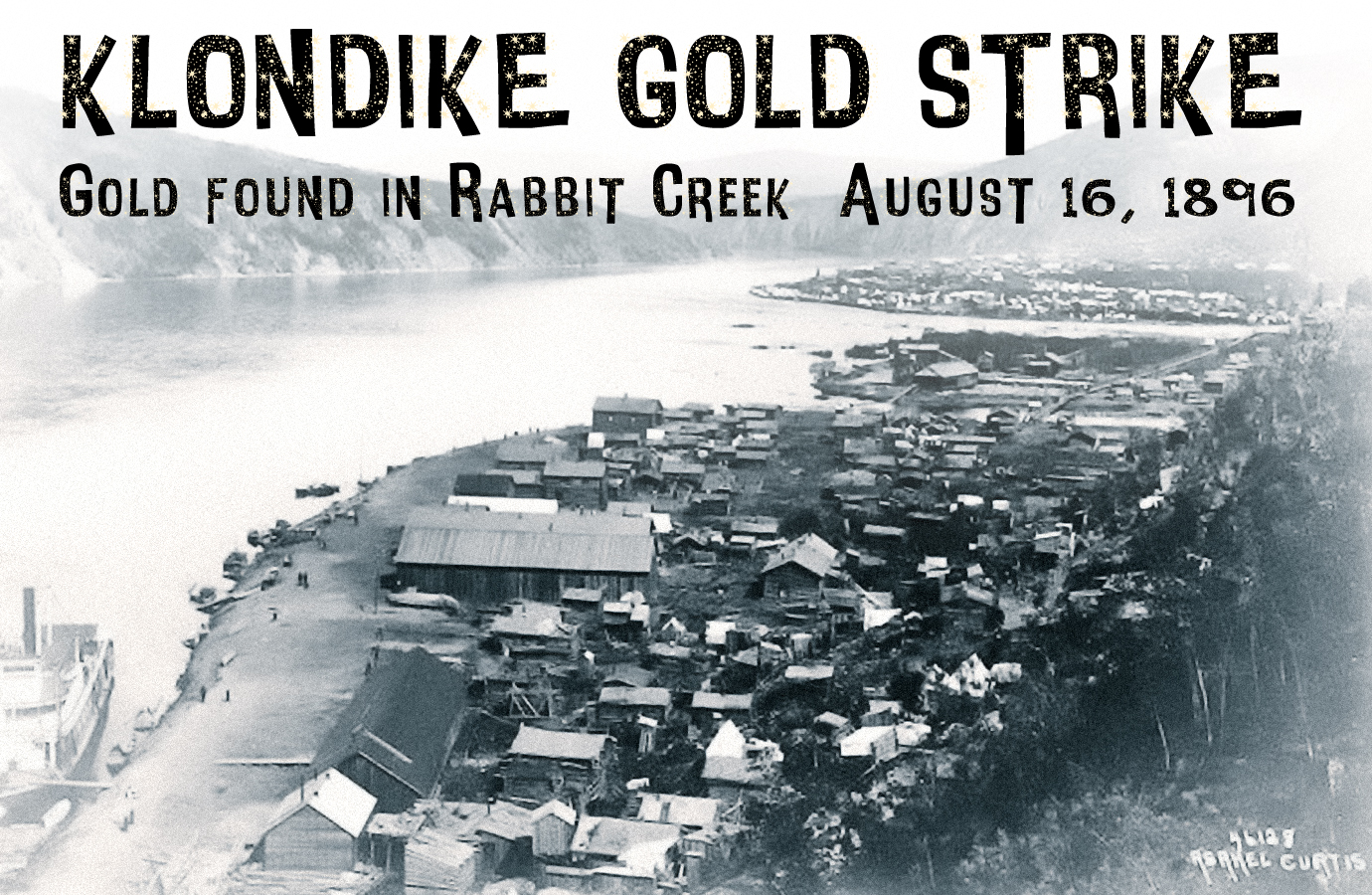
In August of 1896, after three prospectors discovered gold in a branch of the Klondike River in Canada's Yukon Territory along the Alaskan border, news didn't travel fast; it spread like wildfire.
Within weeks, 1,600 prospectors had staked out claims and become overnight millionaires.
It wasn't until July 1897, after a steamship docked in San Francisco with $500,000 in gold and another in Seattle with over two tons of gold, that word reached the masses. These sparks ignited gold-rush fever.
At the time, America was in the throes of a recession and gold sounded like the way out, but it wasn't the easy way out.
For weeks, over 100,000 miners traveled by steam-powered trains to reach the major port cities, even teachers, and doctors. They crammed into ships heading for Alaska throughout the summer and the winter of 1897-98. Stampeders crowded into the newly created Alaskan tent and shack towns of Skagway and Dyea, departure points for the arduous 600-mile trek to the goldfields.
Only 30,000-40,000 of these frantic hopefuls struggled to buy, pack up and lug the full year of required tools, camping, mining and transporting equipment, clothing and food up the treacherous, steep Chilkoot and White Pass Trails. Hauling heavy bundles on overloaded pack animals, they forced a climb over the rocky terrain in the snow. Thousands of animals died; their bones still litter Dead Horse Gulch.
Along the 35-mile trip, murders, suicides, malnutrition, depression, and deaths from avalanches, hypothermia and depression forced thousands to give up. Those who finally reached the river-fed lakes had to build or buy a boat to transport them downriver the final 3-week, 560-mile trip through perilous rapids to Dawson and the Klondike mines. Boats overturned and many lost all their possessions or their lives.
Between August 1896 and August 1899, miners pulled about $29 million in gold from the ground around Dawson City, where proprietors provided the best of everything for the newly rich, making their own fortunes by "mining the miners." Unfortunately, the stampeders learned 'gold for the taking' was a gross exaggeration.
Of the 100,000 stampeders, only 40,000 reached their destination, and only 4,000 managed to get some gold.

Rick Good spent ten years in the newspaper business, including with The News & Observer (Raleigh, NC) and The Greenville News (Greenville, SC). He co-wrote, with Melinda Coleman, Rutledge to Riley: Governors of South Carolina, 1776–Present (Published by The Greenville News), and is the author of Mind Games Trivia #1 (Amazon). He has recently spent 15 years creating original trivia content through Sounds Good Mobile Entertainment and continues that with his new company, SGME Software. He edits The Smart Reader’s money, real estate, and business coverage.