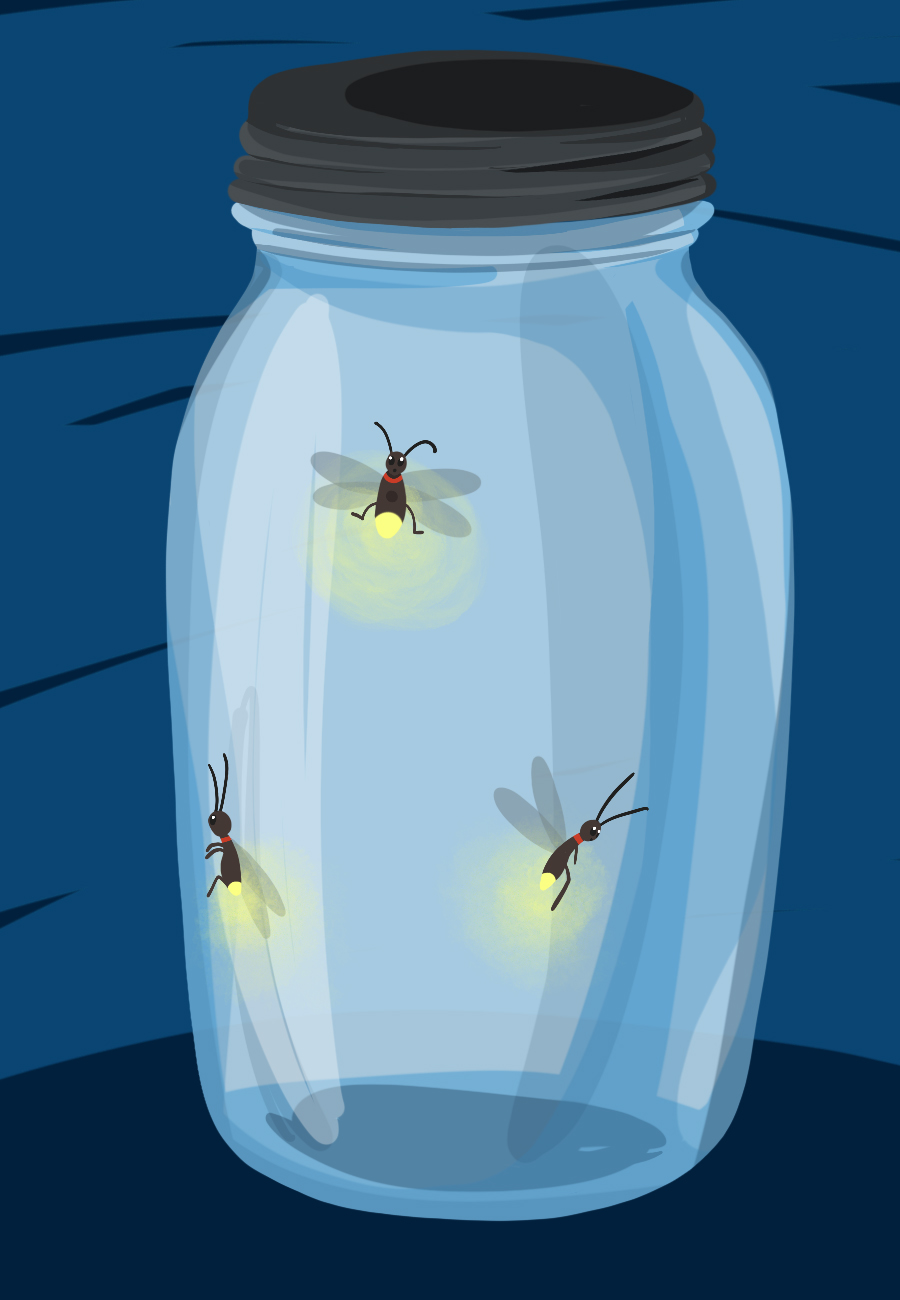
In dark, wooded, or weedy areas in June, the annual firefly show heats up as the little twinklers search for a mate.
Fireflies, also known as lightning bugs, are actually beetles, and there isn't just one kind. In fact, there are 2,000 types worldwide, but many species live and light up together in your back yard or favorite wooded area.
Males fly about flashing their specific pattern, looking for a female to reply. Meanwhile the females are waiting in grass or a bush. When she sees the flash she is looking for, she responds with a flash of her own. Then the conversation begins. Each kind of firefly has its own flash code.
What you see in the flashing fireflies is only a brief period of the insect's life. Most fireflies you see flashing were born from eggs two years previously. They spent all that time in their grub stage, eating and waiting until they metamorphose into adults. As flying fireflies, they live a very short time, sometimes only a couple of weeks, with one mission: To find a mate. The offspring of fireflies you see this year will be flying two years from now.
This system has been an effective system for fireflies and a delight to the eye of humans, but today populations are smaller as all the surrounding light confuses them and prevents them from seeing or interpreting flashes. Best bet: Turn off the yard lights during firefly season. Let some wild areas grow.
Firefly Fact
One species of firefly are synchronous. On the East Coast of the U.S. from Georgia to northern Pennsylvania, the firefly Photinus carolinus flash together in waves. The most famous show is in Elkmont in the Great Smoky Mountains National Park and in the Allegheny National Forest.
Sometimes you can see the effect of waves of fireflies in fields left fallow for at least two years, with long grasses.

Rick Good spent ten years in the newspaper business, including with The News & Observer (Raleigh, NC) and The Greenville News (Greenville, SC). He co-wrote, with Melinda Coleman, Rutledge to Riley: Governors of South Carolina, 1776–Present (Published by The Greenville News), and is the author of Mind Games Trivia #1 (Amazon). He has recently spent 15 years creating original trivia content through Sounds Good Mobile Entertainment and continues that with his new company, SGME Software. He edits The Smart Reader’s money, real estate, and business coverage.