Electrocution is one of OSHA's "Fatal Four", the four leading causes of death in construction, and it behaves differently from most workplace hazards. You cannot always see it, hear it, or smell it. By the time you know it's there, it may already be too late.
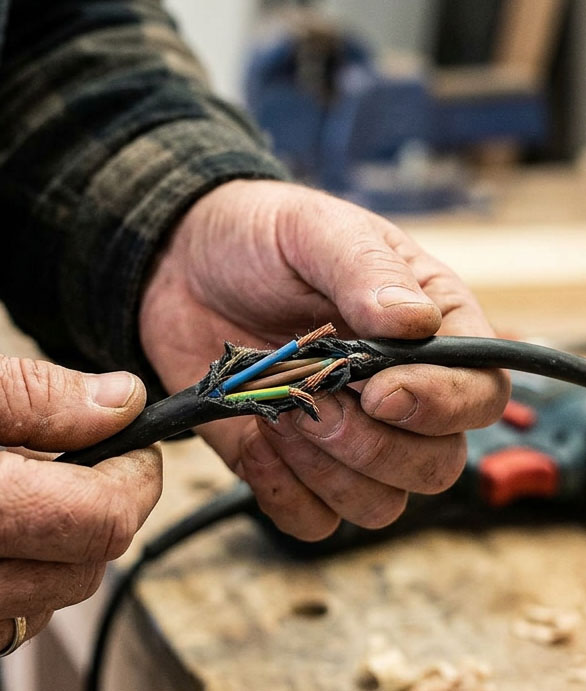
According to the Bureau of Labor Statistics, electrical incidents account for more than five percent of all construction fatalities. The hazards are not exotic. They are the same ones that appear on job sites every day: overhead power lines that workers misjudge the distance to, improperly grounded tools and equipment, extension cords used past the point of safety, and lockout/tagout procedures that get skipped because the job is supposed to be quick.
That last one, lockout/tagout, is worth understanding clearly. Before any maintenance or repair on electrical equipment, the power source must be physically locked out and tagged to prevent anyone else from energizing it while work is in progress. It is not a formality. Workers have been killed by equipment that was re-energized by a coworker who didn't know anyone was still working on it.
Other basics that save lives: know where overhead lines are before you raise anything, a ladder, a piece of pipe, an antenna. Never assume a line is insulated because it looks that way. And if a tool gives you even a small shock, take it out of service immediately. Small shocks are warnings, not minor inconveniences.

Rick Good spent ten years in the newspaper business, including with The News & Observer (Raleigh, NC) and The Greenville News (Greenville, SC). He co-wrote, with Melinda Coleman, Rutledge to Riley: Governors of South Carolina, 1776–Present (Published by The Greenville News), and is the author of Mind Games Trivia #1 (Amazon). He has recently spent 15 years creating original trivia content through Sounds Good Mobile Entertainment and continues that with his new company, SGME Software. He edits The Smart Reader’s money, real estate, and business coverage.