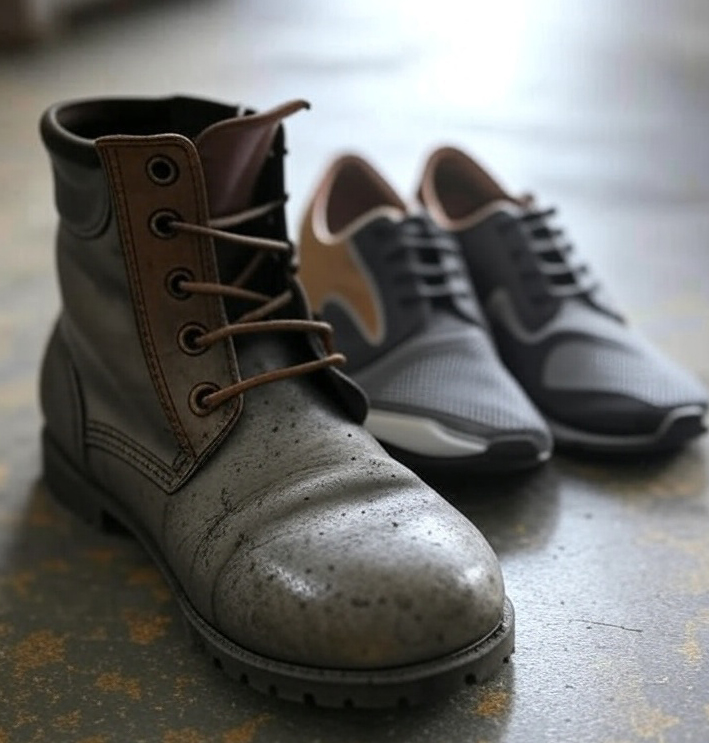
In the sprawling warehouses of 2025, the unsung hero of every worker's shift isn't an AI-driven inventory system'it's their boots.
In a quiet revolution, the work boot industry has transformed, weaving cutting-edge technology into every stitch and sole, making life on the warehouse floor safer, comfier, and just a bit more stylish. Manufacturers like Wolverine, Red Wing, and KEEN have invested in research to swapping heavy steel for lightweight composites and weaving bioscience into linings.
Workers in many industries have relied on steel-toed boots for safety, but they were often short on comfort. The boots are heavy and for workers who do a lot of walking, that extra load can cause knee aches.
In 2025, with the work boot market booming toward $23.14 billion by 2032, new footwear has emerged which might curb the 20 percent of workplace injuries tied to slips, trips, and falls, according to Coherent Marketing Insights.
New safety toes are 30 percent lighter while meeting standards for impact resistance. These alloy and composite toes'made from Kevlar, carbon fiber, or fiberglass can cut fatigue without sacrificing protection against falling boxes or forklift mishaps.
Slip-resistant outsoles are a game-changer on polished concrete floors. Reebok's Sublite Legend, favored by dock workers, used a predictive grip rubber sole that adjusts traction on wet or oily surfaces.
Anti-fatigue technology returns more energy with each step, cushioning the impact of concrete. Look for products by KEEN.ReGEN.
Arch support midsoles reduce risk of plantar fasciitis, especially when paired with ergonomic insoles.
Look for Ripstop Nylon boots to resist tears and for increased durability. Timberland Pro boots feature this.

Rick Good spent ten years in the newspaper business, including with The News & Observer (Raleigh, NC) and The Greenville News (Greenville, SC). He co-wrote, with Melinda Coleman, Rutledge to Riley: Governors of South Carolina, 1776–Present (Published by The Greenville News), and is the author of Mind Games Trivia #1 (Amazon). He has recently spent 15 years creating original trivia content through Sounds Good Mobile Entertainment and continues that with his new company, SGME Software. He edits The Smart Reader’s money, real estate, and business coverage.