
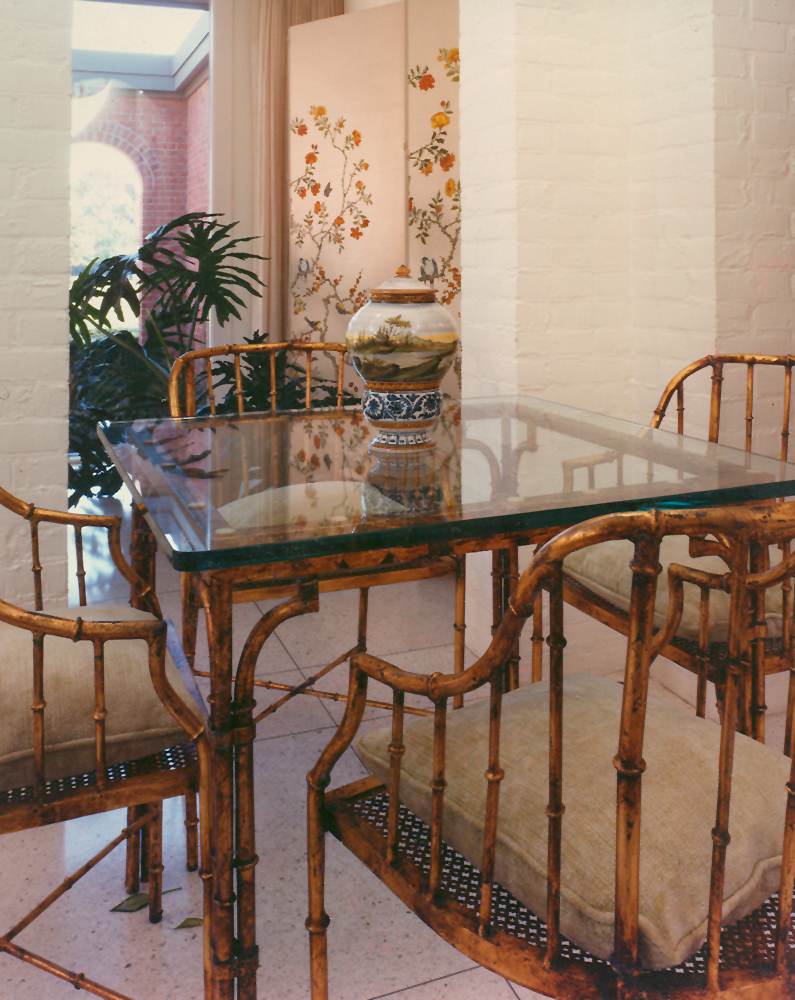
Life's biggies: House, college for the kids and retirement.
If you've got these under control, you just might be able to afford a few luxuries like very good furniture. If you can find pieces that will increase in value as time goes by, investing in them could be the route to both comfort and financial gain.
When you're ready for an interesting (expensive) piece, what features will make it grow in value? Here are some of the factors involved:
The designer: Study respected trade publications such as Interior Design. Being featured there is essential to future value.
Keep a file on your furniture that includes such information to verify its value, say the experts at Christie's. Well-documented pieces fetch much higher prices at auctions.
Limited production: Avoid pieces that are mass-produced, but also skip pieces that are too unusual. It's critical to know how many similar pieces were made or will be made.
High quality workmanship and materials: It has to last or it will never become an antique. If the woods, metals, fabric and leathers promise to develop an attractive patina, it's even better. If it has work by an artisan, it will be more difficult for others to make cheap imitations.
Lines, comfort and practicality: Look for clean lines that will fit with almost any decor. Buy pieces that will be around in 100 years like tables, beds and sofas.
Celebrity ownership: If a piece has been owned by a celebrity, it will have increased value. Even if the piece is like that owned by a celebrity, its value increases.

Rick Good spent ten years in the newspaper business, including with The News & Observer (Raleigh, NC) and The Greenville News (Greenville, SC). He co-wrote, with Melinda Coleman, Rutledge to Riley: Governors of South Carolina, 1776–Present (Published by The Greenville News), and is the author of Mind Games Trivia #1 (Amazon). He has recently spent 15 years creating original trivia content through Sounds Good Mobile Entertainment and continues that with his new company, SGME Software. He edits The Smart Reader’s money, real estate, and business coverage.