
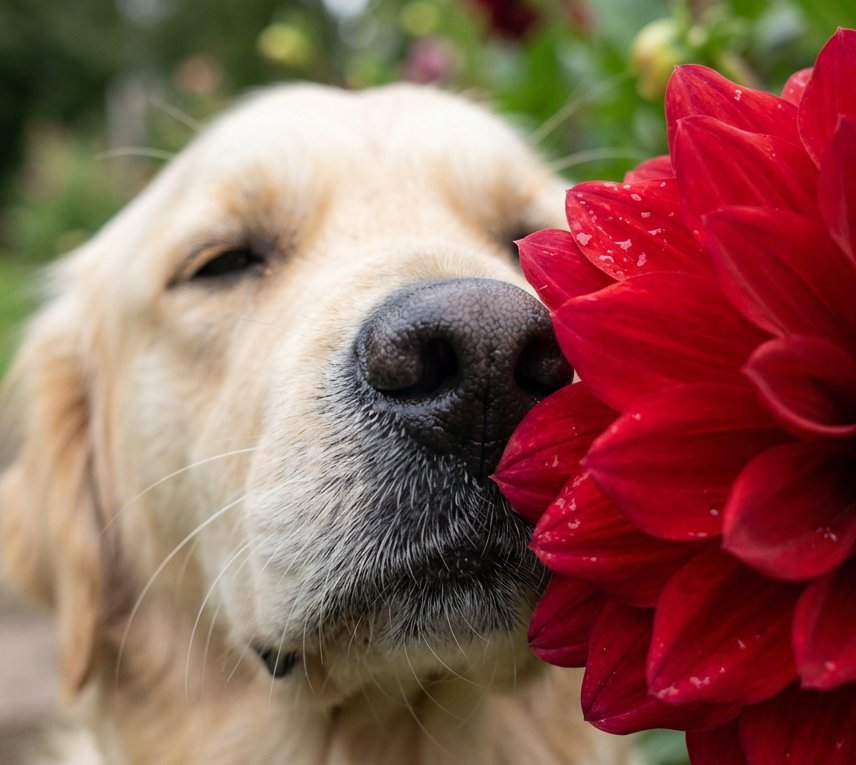
You planted it carefully. You watered it faithfully. Then the dog found it.
If you share your yard with dogs or cats, you already know that certain plants simply will not survive the experience. Dog urine is high in nitrogen, great for lawns in small doses, lethal to many plants in concentrated, daily applications. The good news is that some plants don't just tolerate this abuse. They barely notice it.
Some shrubs that can take it. Abelia is a hardy, flowering shrub that shrugs off repeated nitrogen exposure and looks good doing it. Camellias, beloved for their gorgeous blooms, are surprisingly tough and handle dog traffic well once established. Burkwood's Osmanthus is an elegant evergreen with fragrant flowers that holds up admirably. Red twig dogwood, with its spectacular winter color, rounds out the tough-shrub list nicely, according to Epic Gardening.
Ground level options. Ornamental grasses, particularly feather reed grass, are among the most resilient choices available. Rosemary, lavender, and peppermint are wonderfully aromatic, largely ignored by pets, and surprisingly durable. Sword ferns and holly ferns handle pet traffic with quiet dignity.
A few practical notes. Newly planted shrubs are vulnerable, established plants handle the assault far better, so start with the largest specimens your budget allows. Mulch with pine bark or cypress, but not cocoa mulch, which is toxic to dogs.
If a corner of the yard is a lost cause, there is no shame in the fake plant.

Rick Good spent ten years in the newspaper business, including with The News & Observer (Raleigh, NC) and The Greenville News (Greenville, SC). He co-wrote, with Melinda Coleman, Rutledge to Riley: Governors of South Carolina, 1776–Present (Published by The Greenville News), and is the author of Mind Games Trivia #1 (Amazon). He has recently spent 15 years creating original trivia content through Sounds Good Mobile Entertainment and continues that with his new company, SGME Software. He edits The Smart Reader’s money, real estate, and business coverage.