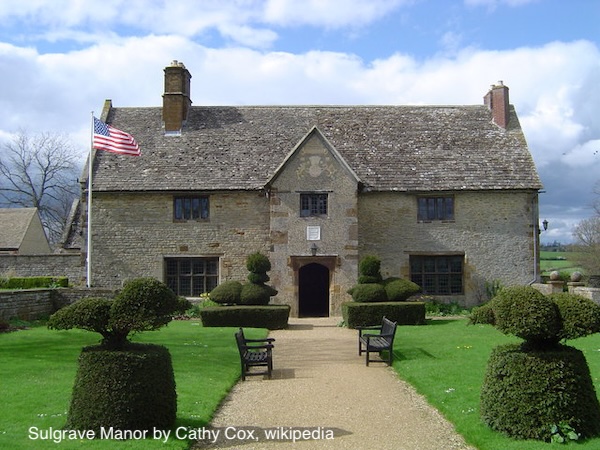
The man whose signature anchors the U.S. Constitution came from a family that began in a Tudor farmhouse in the English Midlands — a house Americans still cross the ocean to tour.
On September 17, 1787, George Washington presided over the close of the Constitutional Convention in Philadelphia and was the first delegate to sign. But the Washington family story begins across the Atlantic, in the village of Sulgrave, Northamptonshire.
Sulgrave Manor is a Tudor hall house built by Lawrence Washington, a wool merchant who twice served as mayor of nearby Northampton. According to Mount Vernon, he acquired the land after Henry VIII dissolved England’s monasteries and raised the house beginning in 1539. The Washingtons lived there for roughly a century.
The name is older still. According to the National Trust, it traces to a manor called Wessyngton in north-east England, where a 12th-century tenant took the estate’s name as his own. Over generations Wessyngton became Washington, and that first family seat — Washington Old Hall, near Sunderland — still stands.
The American branch began with a single departure. According to Mount Vernon, George’s great-grandfather John Washington sailed for Virginia in 1656 and never came back. His great-grandson would grow up to command the Continental Army and then lead the new republic.
Sulgrave itself nearly vanished. By the early 1900s it had fallen to a derelict farmhouse. An Anglo-American committee bought it in 1914 to mark a hundred years of peace between the two nations, and it was restored in the 1920s. Today it draws thousands of American visitors a year.

Briefs and quick reads selected and edited by The Smart Reader’s editorial team.