


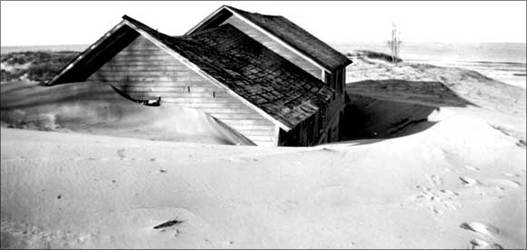
In the 1800s, it was possible to start a town, but not to save it from nature and bad decisions.
The town of Singapore, Mich. was a town started by a fellow from New York who wanted to build a port town to rival Chicago and Milwaukee, and it was ended by the great fires that raged through the Midwest of in the first week of October 1871.
But flames didn't kill the town. Bad decisions did.
The little town stood on the Lake Michigan shoreline at the Kalamazoo River. It became a prosperous place by 1850, servicing the city of Chicago and the surrounding area with lumber transported over the lake.
When vast tracts of the Midwest were reduced to ash that October, the town of Singapore was unaffected. But after the fire, demand for lumber soared as razed cities and towns rebuilt.
So they cut down the trees around Singapore to sell. All of them.
Then the winds from Lake Michigan blew sand over Singapore. With no trees to halt erosion or to break the wind, the town quickly descended into ruin. By 1875, sand covered the town and the residents had to evacuate.
Today, people play and enjoy the Michigan dunes, many unaware that under their feet lie the houses, hotels, and stores of a town that sold its trees.