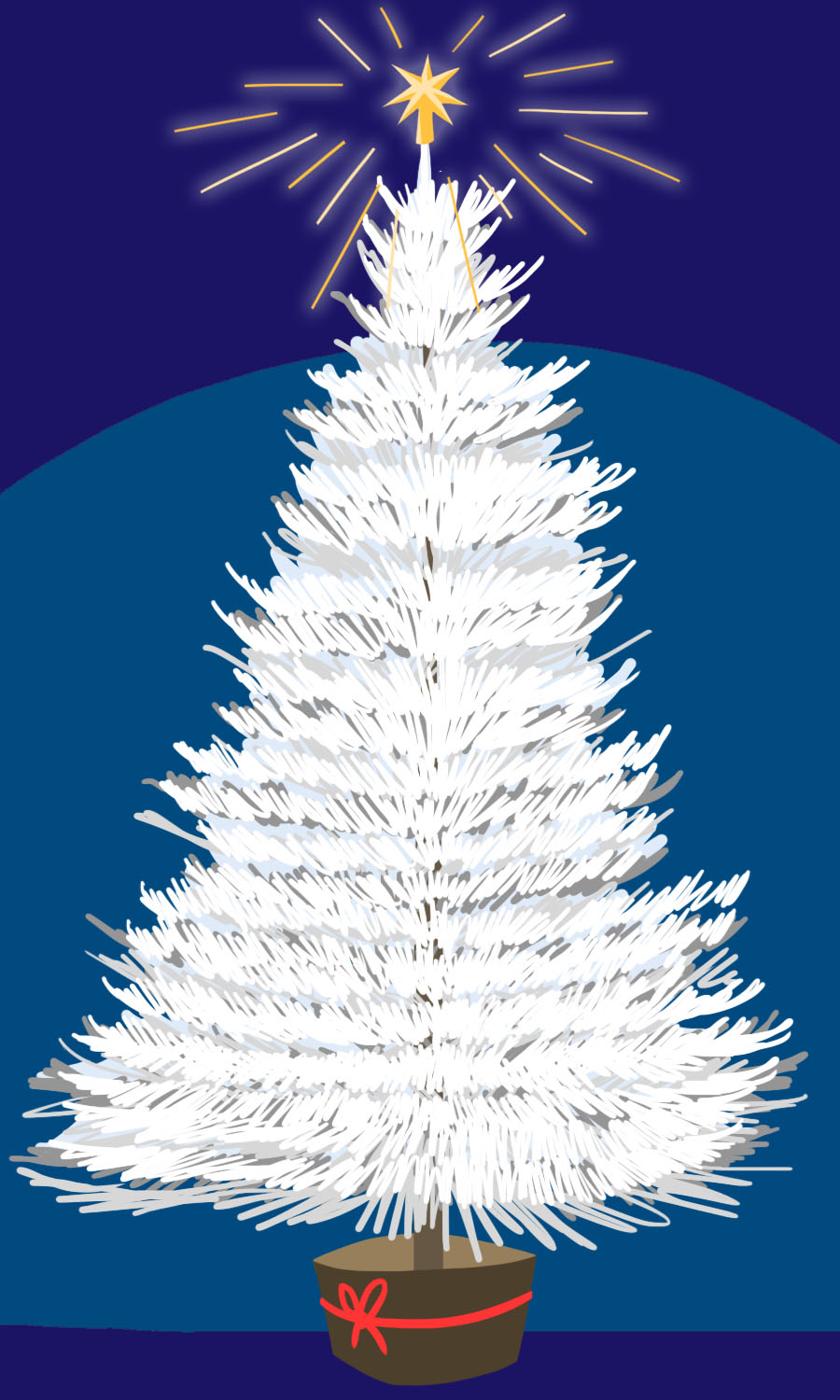
In the 1960s, if the Christmas tree wasn't a shimmering silver aluminum, then it was probably flocked. Heavily flocked. A real tree covered with thick, white goopy stuff.
Welcome to the future. Nearly 60 years later, nostalgia in white, silver and flocked trees has come full circle, out of garage sales and back into the living room.
According to the Wall Street Journal, this is likely due to Instagram and social media where, if you want to display your favorite colorful ornaments, nothing shows them off as well as a white tree.
In some ways, the white trees are a backlash against the all-natural trend in design, food, clothing and life in general, says the Journal. Besides, it is exhausting and expensive to head out to the tree farms to find and cut just the right spruce or pine.
If it is a backlash, it got started in 2017, when Wayfair saw white tree sales spike, quadruple the year before and selling out earlier. White trees made up 13 percent of total Christmas tree sales, up from 5 percent the year before.
This year, as in the 1970s, white trees make the perfect backdrop for ornamental themes. One-color ornaments are popular, as are white-on-white flocked trees and lights. It certainly adds a bright spot to a room.
Especially with flocked trees, you can still go native with wooden ornaments, pine cones and toys mixing with lights of a single color.

Rick Good spent ten years in the newspaper business, including with The News & Observer (Raleigh, NC) and The Greenville News (Greenville, SC). He co-wrote, with Melinda Coleman, Rutledge to Riley: Governors of South Carolina, 1776–Present (Published by The Greenville News), and is the author of Mind Games Trivia #1 (Amazon). He has recently spent 15 years creating original trivia content through Sounds Good Mobile Entertainment and continues that with his new company, SGME Software. He edits The Smart Reader’s money, real estate, and business coverage.