

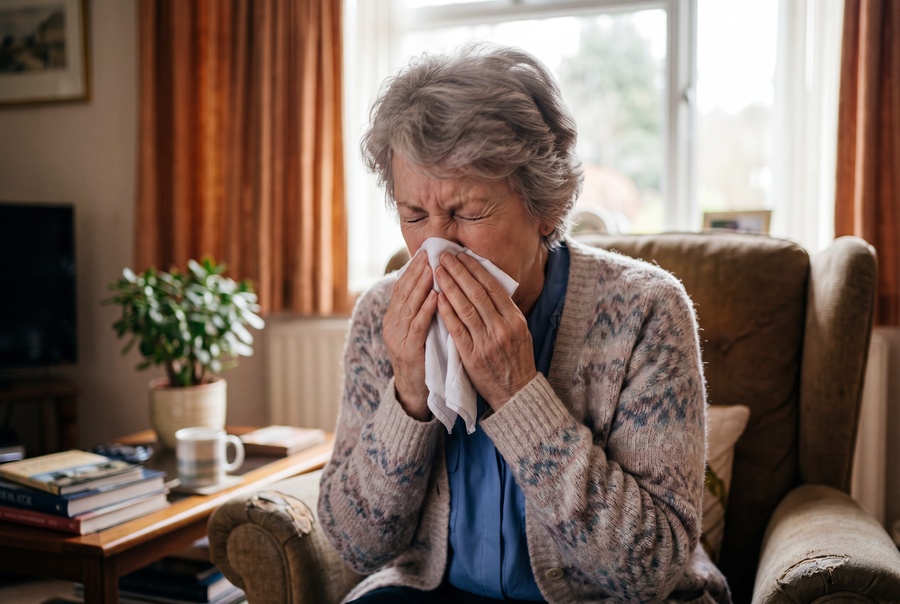
Allergies are supposed to be a childhood problem you eventually outgrow. For a lot of people, it works the other way around. While most allergies begin early in life, adults can develop them at any age, even in their 60s and 70s, according to the Cleveland Clinic. Allergies you have lived with for years can also grow worse, not better, with age.
Part of the reason is something researchers call inflamm-aging, the low-grade inflammation that builds in the body over the years, leaving the immune system quicker to overreact. Drier, thinner nasal passages and longer pollen seasons pile on. Ragweed, the main late-summer trigger, begins releasing pollen in August.
One caution matters especially for older adults. The old standby antihistamines like Benadryl (diphenhydramine) can bring on confusion, drowsiness, and falls in seniors, and the American Geriatrics Society lists them among the medications older adults should generally avoid.

Rick Good spent ten years in the newspaper business, including with The News & Observer (Raleigh, NC) and The Greenville News (Greenville, SC). He co-wrote, with Melinda Coleman, Rutledge to Riley: Governors of South Carolina, 1776–Present (Published by The Greenville News), and is the author of Mind Games Trivia #1 (Amazon). He has recently spent 15 years creating original trivia content through Sounds Good Mobile Entertainment and continues that with his new company, SGME Software. He edits The Smart Reader’s money, real estate, and business coverage.